
So, Which One Should You Actually Choose?
To be honest, it really does come down to how you intend to use your licence once you have one. This seems like a cop-out move on my part but it’s not. The whole discussion on manual versus automatic licence becomes confusing in nature because people see this in terms of right and wrong — that is, a choice which will make them a better driver. That is simply not the case.
What we can do, however, is remove all of the nonsense from the equation and provide you with a truly accurate picture of each driving experience, warts and all.
What's Actually Different Between the Two
An automatic car does the gear work for you. You get in, you drive. Accelerate, brake, steer — that’s the job. The car handles everything else.
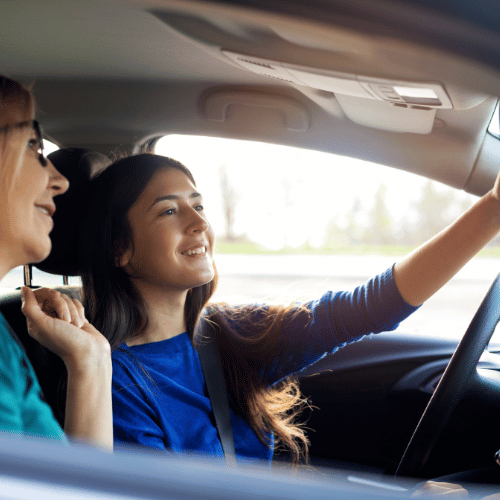
A manual asks you to do more. You’re operating a clutch pedal with your left foot, shifting through gears with your left hand, and doing all of that while also steering, observing traffic, reading intersections and managing your speed. It’s genuinely harder to learn. Not impossible — people learn it every day — but there’s more going on, and in the early lessons that extra load is very noticeable.
That’s the honest summary. Neither option makes you a safer or more capable driver in the long run. But they do create a very different learning experience, especially in those first few months.
The Case for Going Automatic
If your honest answer to what you will drive day-to-day is probably a modern car you buy or lease yourself, then automatic almost certainly makes sense. The majority of new cars sold in Australia are automatics. Autos dominate city driving, especially in Adelaide’s suburban streets and CBD traffic where stop-start conditions make a manual clutch genuinely tedious.
And here’s the practical upside: when you’re not managing a gearbox, you can focus on actually driving. Reading the road, anticipating gaps in traffic, getting comfortable with roundabouts, parking without panic — these are the skills that matter, and you develop them faster when gear changes aren’t taking up cognitive bandwidth in every lesson.
That’s why Automatic driving lessons Adelaide have grown in popularity. It’s not laziness. It’s learners making a sensible decision about where their attention is best spent.
The Case for Learning Manual
Manual makes sense if you know you’ll need it. Certain trades and jobs require a manual licence — heavy vehicles, older fleet vehicles, some rural work environments. If you’re heading into any of those, learning manual from the start is obviously the right call.
There’s also a real argument for manual if you’re likely to drive older or varied vehicles — family members’ cars, hire cars overseas, older utes. An automatic licence doesn’t cover manual vehicles. A manual licence covers both. That flexibility is permanent, and worth something.
The honest caveat: manual takes longer to get comfortable with. Not because learners aren’t capable, but because there’s genuinely more to learn. Budget for more lessons. Be prepared for the early sessions to feel chaotic — stalling at traffic lights is basically a rite of passage — and know that it does get easier.
The Test Doesn't Have to Be the Most Frightening Part
This matters and gets skipped in a lot of comparisons. In South Australia, if you pass your driving test in an automatic, your licence is restricted to automatic vehicles until you complete an additional test in a manual. That restriction follows you.
For many people that’s fine. But if you’re not sure what vehicles you might need to drive in the next few years — a partner’s manual car, a work vehicle, travel — it’s worth thinking about now rather than dealing with it later.
Quality of Instruction Matters More Than the Gear Choice
Here’s the thing people underestimate: a great instructor in either vehicle will produce a better driver than a mediocre instructor in the ‘better’ one. The vehicle choice matters less than you’d think once you’re actually in the lesson.
Good Driving classes in Adelaide build skills in a specific order. Quieter streets before busy ones. Simpler manoeuvres before complex ones. Confidence before speed. A good instructor doesn’t just sit there while you figure it out — they explain what’s happening in the environment ahead, they give you something to focus on before each situation arrives, and they debrief what happened afterward so the lesson actually sticks.
That’s what separates lessons that feel productive from lessons that just accumulate hours.
Picking the Right School
Some practical issues to consider before booking your course. Are automatic and manual cars available at the school? Is it flexible enough to change between them should you change your mind? Are the teachers patient with anxious students, or do they tend to be brisk and business like?
The Best driving school in Adelaide is that one where you will be able to find the teacher matching your style of learning, the courses will be meaningful to you, and there will be no dread when you need to go behind the wheel. The latter is more important than it seems.
Conclusion
Choose automatic if: you will be driving modern cars, you wish to learn fast, city driving is your predominant environment, or you wish to gain confidence swiftly without having to operate a gearbox.
Choose manual if: it’s necessary for your profession or lifestyle, you wish to have the most flexible driving license, or you actually wish to learn how to drive a wide range of cars.
In either case – get proper instruction. The car is secondary. The instruction is what matters.